Skip to content

Events

Seminar: Beauty Bound by British Propaganda: Literary Annuals, Colonial Print & Digital Archives

Thursday 19 March, 11 am – 12 noon
Puaka James Hight 210
Katherine D. Harris (San Jose State University)
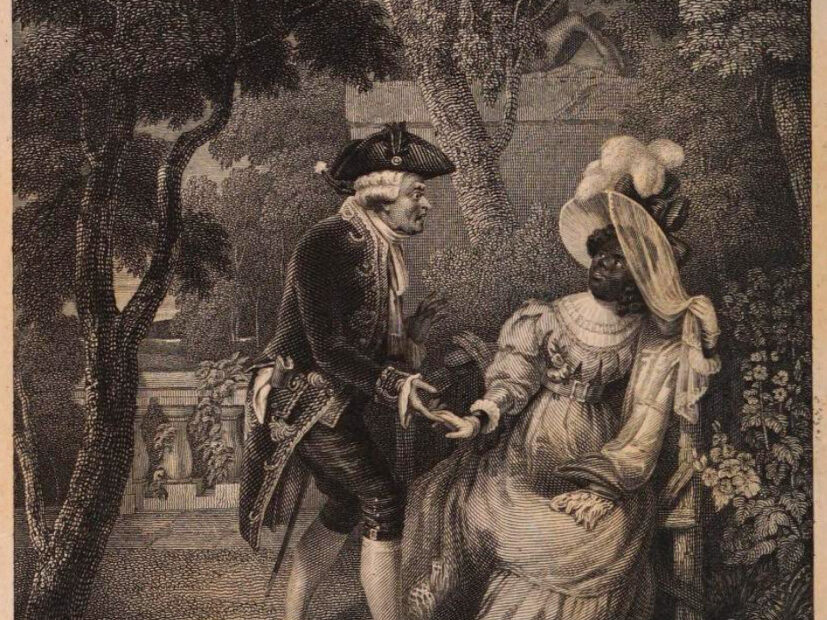
In the short story, “Uncle Anthony’s Blunder,” a gentleman approaches a young lady whose back is turned to him. From behind, she is dressed in fine clothing with hands covered by gloves. Before waiting for her to turn around, the older man, Antony Nesfield, blurts out a proposal of marriage, however, when she turns around, he discovers that she’s Jamaican and Black – a case of mistaken identity. The engraving and following short story appear on page 231 of a 343-page duodecimo volume, published in the 1833 Forget Me Not, a literary annual title that first appeared in 1823 and lead the revolution in combining the almanac, women’s conduct manuals, and emblem books.

Digital Research Symposium

Monday 9 February
The Arts Digital Lab invites you to join us for this celebration of Digital Research in the Faculty of Arts, at which recipients of the 2025 Arts Digital Seed Fund will present on their research.

DHRN Seminar: Leading by (sceptical) Example: Implementing a Consistent Approach to Generative AI in Teaching

Jacq Jones (they/them), La Trobe University. Thursday 12 February.
A position statement on Generative AI (GenAI) in Teaching and Research was developed at La Trobe University in response to the rapid adoption of these technologies by both students and tertiary institutions, and implemented into all courses from September 2025. In the talk, we present a summary of the position statement and examples of how it has been integrated into undergraduate classes, including discussion, pre-bunking activities, and changes to assessment design.

DHRN Seminar: I Hope this Helps: Comparing Emotional Content of Physician & Chatbot Responses to Health Queries

Danny Burns (University of Wyoming). Monday 16 February.
Recent surveys suggest that a large portion of the population is open to using generative artificial intelligence (AI) for health-related questions. While prior research has primarily focused on the factual accuracy of AI-generated responses, some studies indicate that both physicians and patients often prefer chatbot-generated text over physician-written responses.

Arts Digital Seed Fund Proposals Workshop

Tuesday 10 February 2026. Prospective applicants for the 2026 Faculty of Arts Digital Research Seed Fund are invited to attend this workshop to discuss and develop your proposal ideas, ask questions about the fund and application process, and get advice from last year’s recipients and the ADL team. 

May DHRN Seminar: Changing the narrative to achieve community-centred disaster recovery for real

David Sanderson (UNSW Sydney) While everyone agrees that community-centred disaster recovery is the ‘gold standard’, this is rarely achieved. Drawing on international practice, this seminar will discuss the barriers to community-centred disaster recovery and how it can be better achieved. Professor David Sanderson from UNSW Sydney has over 30 years’… Read More »May DHRN Seminar: Changing the narrative to achieve community-centred disaster recovery for real

February DHRN Seminar: The Digital Entertainment Machine research project: early findings and emerging ideas

Emily Cousins (University of Southern Denmark) Are your days shaped by the sounds of personalised playlists or podcasts? Perhaps you consume video reels or curate online pinboards? Or maybe you relax and recharge with some streaming or gaming? In this seminar, Emily will introduce the Digital Entertainment Machine (DiEM) research… Read More »February DHRN Seminar: The Digital Entertainment Machine research project: early findings and emerging ideas