
Starting a career in data science is often focused on the technical stack: Python, R, SQL, and the latest machine learning models. As a recent Master of Applied Data Science (MADS) graduate, I can confirm that while those skills are the engine of your career, they aren’t the steering wheel.
During my studies, I worked as a Research Assistant (RA) at the Arts Digital Lab (ADL). That experience didn’t just support me financially after graduating from MADS, it was the bridge that took me from being a student to being an employable professional.
Now that I’ve landed a role as a Data Analyst at Te Tihi o Ruahine Whānau Ora Alliance, I can see exactly how my time at the ADL set me apart. Here are the three biggest lessons I learned in the Lab that I couldn’t learn in the classroom.
1. Navigating Ambiguity (There is no “Answer Key”)
In a Master’s assignment, the approach is usually clear. You are given a dataset, a specific problem, and often a hint at the methodology. You know there is a “right” answer.
Real-world research isn’t like that. Working on the Tracking Changing Forms of Racism in NZ Discourse project, I wasn’t just handed a clean CSV file. I had to build the data pipelines myself, structuring a large dataset of online comments for analysis.
The ADL taught me that real-world challenge is about figuring out how to get the data and what approach might work. I learned to be comfortable with trial and error, a skill that is critical now that I’m managing real operational data.
2. The “Translator” Skill Set
One of the unique things about the Arts Digital Lab is that it is interdisciplinary. You aren’t just sitting in a room with other coders, you are working alongside humanities researchers, linguists, and social scientists.
I quickly realized that a complex text classification model is useless if I can’t explain why it works to a non-technical stakeholder. I had to learn to translate my code into concepts that made sense for the research goals.
This “soft skill” became a hard asset during my job interviews. Being able to demonstrate that I could collaborate across disciplines and make data accessible was a huge selling point. In fact, one of the questions in my job interview was “Can you give us some examples of how you explain technical findings to non-technical audience?”. When asked, my first thought was “I’ve had plenty of this experience at the ADL”.
3. Domain Knowledge is Power
Perhaps the biggest advantage the ADL gave me was the opportunity to work with Māori data, which, in my opinion, is the data of cultural significance.
My work on the Mapping Māori Iwi Services & Infrastructure project forced me to look beyond just data collection. I wasn’t just processing data; I was handling information that mattered to communities. I had to engage with the principles of Māori Data Sovereignty and understand the historical context of this practice.
When I interviewed for my current role at a Whānau Ora organisation, I didn’t just talk about Python libraries. I was able to discuss how I had applied technical skills within a Te Ao Māori framework and treated data as taonga (treasure). That specific experience, gained entirely through the ADL, was the hook that helped me secure the job.
Final Thoughts
If you are currently studying, or have recently graduated, my advice is to look for opportunities to apply your skills outside of the classroom.
The ADL gave me a space to break things, fix them, and learn how data interacts with the real world. It turned me from a graduate who knew how to code into a professional who knew how to solve problems.
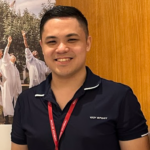
Viet Anh Do is a Master of Applied Data Science graduate, former Research Assistant at the Arts Digital Lab and Data Analyst at Te Tihi o Ruahine Whānau Ora Alliance.